Metal Cabinet vs Wood Cabinets for Garage Storage: Which Is Better? (October 2026)
Choose metal for adjustable shelves and a key lock, or wood for a dry garage where finish and custom sizing matter. For a metal cabinet vs wood choice, compare moisture, load guidance, setup and care with your space.
On this page (8 sections)
- Metal cabinet vs wood: which suits your garage?
- How do metal and wood handle moisture?
- Which cabinet is right for heavy tools?
- What should you check before assembly?
- Who should choose metal, wood or resin?
- What mistakes can lead to the wrong cabinet?
- How should you care for a garage cabinet?
- Which garage cabinet material should you choose?
For a metal cabinet vs wood decision, choose metal for adjustable shelves and a lock, or wood for a dry garage where finish and custom sizing matter. Compare the actual cabinet’s load guidance, fit, setup and care needs before deciding.
Metal cabinets vary in construction and finish, so the material alone doesn’t establish how much weight a shelf can hold. Wood cabinets vary too; their load limits and moisture tolerance depend on their build and finish.
Resin is a third option if rust resistance and simple assembly matter more than adjustable shelf spacing. This guide helps you match each material to your garage, your stored items and the work you’re willing to do.


Metal cabinet vs wood: which suits your garage?
Metal works well when you want adjustable storage and lockable doors; wood can suit a dry garage where appearance or a custom fit leads. Choose based on how the cabinet will be used, not just the material name.
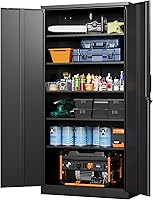
A steel cabinet may pair a powder-coated surface with shelves you can reposition as your storage changes. The Yizosh has 5 adjustable shelves and a key lock, while the GAIOUS has adjustable feet and an anti-tip device.
Wood cabinets come in a range of styles and sizes. A freestanding unit may suit a finished garage.
A custom cabinet can fit a particular wall or storage plan. Check that its material, finish and installation directions suit the conditions in your garage.
Neither material wins for every household. A steel cabinet adds little value if fixed shelf spacing already suits your bins.
A wood cabinet is a poor fit if it will sit beside a recurring leak. Start with the demands of the space.
For room planning and cabinet styles, see our guide to choosing garage cabinets for your space. It covers the measurements and storage questions to settle before you pick a material.
How do metal and wood handle moisture?
Metal needs its protective finish kept intact, while wood needs a finish and location suited to humidity and spills. Neither material should sit in standing water or beside an active leak.
Powder-coated steel can resist rust and scratches, but a deep chip may expose steel beneath the coating. Wipe up moisture, dry the surface, and inspect edges, corners and hardware for damage.
Wood can absorb moisture and swell or change shape, depending on the construction and finish. Keep it away from leaks and standing water, and follow the care directions for that specific cabinet.
If the garage gets damp, consider whether you can keep up with this care before choosing steel or wood. For a steel cabinet, our guide on how to keep a metal garage cabinet from rusting explains ways to protect its finish.
Resin is worth comparing when rust and rot are your main concerns. Rubbermaid describes its resin cabinet as resistant to rust, dents, rot and peeling, though you should still clean it and use it as directed.
Which cabinet is right for heavy tools?
Choose by the stated shelf capacity and installation directions, rather than assuming every cabinet made from one material is stronger. Capacity can differ across models, and the cabinet must be assembled and secured as directed.
The Yizosh steel cabinet is described as holding up to 180 lb per shelf. That is guidance for this model, not a general capacity for steel cabinets or a reason to load every shelf to its limit.
For wood, look for load guidance that says whether the limit applies to each shelf or the whole cabinet. Pay attention to where heavy items can go, and avoid uneven loading that could strain shelves or make the cabinet unstable.
Put heavy tools low when the cabinet design allows it. This makes items easier to reach and helps keep weight from building up near the top of a tall cabinet.
What should you check before assembly?
Measure the location and the route into it before choosing a tall freestanding cabinet. Allow for the cabinet’s full footprint and for doors to open without blocking a walkway, vehicle or work area.
Measure height, width and depth at the intended spot. Then check corners, doorways and other tight points on the route from delivery to the garage.
A cabinet that fits an empty wall may still be difficult to move into position.
Assembly differs by model. The Yizosh arrives as a knock-down cabinet and includes assembly instructions.
GAIOUS recommends two people, and you’ll need to provide a screwdriver or electric drill.
Wood units may arrive assembled, flat-packed or as custom work, so check the specific setup instructions. Account for space to lay out parts, time to assemble, and whether a second person will be available for a tall cabinet.
Once assembled, use the included anti-tip hardware or follow the manufacturer’s securing instructions where applicable. A tall cabinet with doors and shelves needs a stable position and a clear path for opening its doors.
Who should choose metal, wood or resin?
Pick metal for adjustable, lockable storage; wood for a dry garage where style or a custom fit matters; and resin for rust resistance and tool-free assembly. Each works best when its limits match your space and storage habits.
Metal suits people who sort changing collections of tools, supplies or household items. Adjustable shelves can accommodate different heights.
A key lock can keep contents behind closed doors. Skip a tall steel cabinet if you lack the clearance, don’t want to assemble it, or can’t protect its finish from repeated moisture.
Wood suits a dry garage that feels more like an extension of the home, or a space that needs a specific size and finish. It’s a weaker choice for a spot with leaks, standing water or frequent wet cleanup unless its design and finish are made for those conditions.
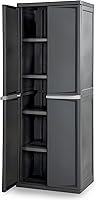
Resin suits buyers who want a cabinet designed to resist rust and prefer a snap-together setup. The Rubbermaid model has fixed shelves, so skip it if you need to adjust shelf height for tall containers or bulky gear.
Our resin garage cabinet guide compares more options and helps you decide whether fixed shelves will work for your storage.
What mistakes can lead to the wrong cabinet?
The biggest mistake is choosing by material alone without checking the cabinet’s dimensions, load guidance, shelf layout and care needs. A short checklist can prevent a mismatch that’s hard to fix after assembly.
First, don’t equate “metal” with a guaranteed load limit or “wood” with a cabinet built for heavy tools. Read the maker’s capacity directions and check whether they apply per shelf or across the whole cabinet.
Second, don’t overlook moisture. Steel can rust if its protective coating is damaged.
Wood can swell or change shape when exposed to water. If a damp spot is unavoidable, compare resin or another design intended for the location.
Third, don’t assume adjustable shelves are essential. If your storage is mostly same-sized boxes, fixed shelves may do the job.
If tools, bottles and tall containers share the cabinet, adjustable spacing can be more useful.
Finally, don’t forget the setup burden. A cabinet that needs two people, tools or wall anchoring may be a poor fit if you have limited help or cannot secure it as directed.
How should you care for a garage cabinet?
Keep the cabinet clean, dry and stable, and follow the care directions for its material and finish. Regular checks help you notice spills, loose parts or surface damage early.
For steel, wipe dust and spills with a soft cloth, then dry the surface. Avoid rough tools that may scratch the coating, and inspect edges and corners for chips.
For wood, use a cleaner suited to its finish. Check for water marks, lifted edges and loose joints, especially near the floor or exterior walls.
Resin avoids rust concerns, but dirt still gathers on shelves and around door edges. Clean it with a method allowed by its instructions and check that snapped connections remain secure.
Which garage cabinet material should you choose?
Choose metal for flexible shelves and a key lock, wood for a dry garage where finish or custom sizing matters, and resin for rust resistance with simple setup. For a metal cabinet vs wood choice, let moisture, fit and the items you store make the call.
Choose the Yizosh if you want a key lock and adjustable shelves for tools or supplies. The GAIOUS is a fit when adjustable feet and a tall cabinet suit your space.
Choose Rubbermaid if fixed shelves and snap-together resin construction fit your needs.
Before you buy, measure the cabinet area and delivery route, check the shelf layout and load guidance, and decide how much assembly you can handle. For another layout option, compare garage cabinets with open shelves.
Frequently asked questions
Are metal or wood cabinets better for a garage?
Metal suits a garage cabinet when you want adjustable shelves, a key lock or a powder-coated surface. Wood can suit a dry, stable garage where appearance and custom sizing matter.
Compare the exact cabinet's load guidance, finish, assembly and care needs before choosing.
Do metal garage cabinets rust?
Metal can rust if its protective finish is damaged and moisture reaches the steel. Keep the cabinet dry, clean spills, and check for chips or scratches.
A powder-coated finish described as rust resistant can help, but it doesn't remove the need for care.
Can wood cabinets hold heavy garage tools?
They may, if the cabinet and shelves are built and installed for the load. Check the manufacturer's weight guidance for each shelf and the whole cabinet, and account for how the cabinet is secured.
Don't assume a wood cabinet has the same capacity as another design.
Is resin a good alternative to metal or wood?
Resin can be a useful alternative when you want a cabinet designed to resist rust and avoid wood care. The Rubbermaid cabinet has 4 fixed shelves and snap-together assembly, but its lock isn't included.
Check shelf spacing and the intended location before you choose it.