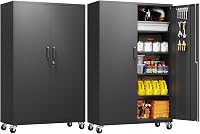
What Is a Standard Garage Cabinet Size?
There isn't one fixed standard garage cabinet size. Many freestanding cabinets are about 36 in wide, 18 in deep, and 72 in tall, but shorter and wider options suit different spaces.
On this page (7 sections)
- What is a standard garage cabinet size?
- How do you choose a garage cabinet height?
- How wide should a garage cabinet be?
- How deep should a garage storage cabinet be?
- How should you measure before buying?
- What mistakes make a garage cabinet the wrong size?
- Which standard garage cabinet size fits your storage plan?
There isn't one fixed standard garage cabinet size. Many freestanding metal cabinets are about 36 in wide, 18 in deep, and 72 in tall, but the right size depends on what you store, how much wall space you have, and whether you need to keep parking and walking clear.
Start by measuring the intended spot, including the cabinet’s full depth and door swing. Then measure the largest items you want to store and check the route through the garage, since a cabinet that fits its final location still needs to get there and be assembled.
What is a standard garage cabinet size?
A common tall garage cabinet is about 36 in wide, 18 in deep, and 72 in tall. Treat that as a useful comparison point, not a fixed standard: short cabinets, shallow units, and wider storage also serve common garage needs.
The Letaya measures 36 in wide, 18 in deep, and 72 in tall. It has five adjustable shelves, a key lock, and adjustable feet.
It suits someone who wants a tall, enclosed place for tools or household supplies. Skip this format if the ceiling is low or you need to reach every shelf without stretching.
The GAIOUS is also 36 in wide and 18 in deep, but stands 75.2 in tall. Its five adjustable shelves can accommodate items of different heights.
This makes it a fit when you want tall storage with flexible shelf spacing. Its height makes careful ceiling and assembly clearance checks especially important.
For a closer look at cabinet depth and how it affects garage space, read how deep garage cabinets are.
How do you choose a garage cabinet height?
Choose a height that clears overhead obstacles and keeps the items you use often within reach. Measure from the floor to the lowest fixture, shelf, pipe, or garage door track above the planned spot.
Tall cabinets use wall height efficiently, but you need room to assemble and position them. Check the assembly instructions and consider whether the assembled cabinet can be raised upright in that location.
A cabinet’s final height alone doesn’t show whether there is enough clearance to install it.
Short cabinets are easier to reach over and can fit beneath a window or beside a work surface. The Fesbos stands 35.5 in tall, making it a practical option for lower storage.
It measures 31.5 in wide and 15.7 in deep, with two adjustable partitions and a lock.
Choose the Fesbos if you want a shorter, shallower steel cabinet for tools and supplies. Skip it if you need a tall storage tower or room for especially bulky items.
For a tall unit, follow the maker’s anchoring instructions and see the guide to keeping a tall garage cabinet stable.
How wide should a garage cabinet be?
Pick a width that fits the wall and leaves room for doors to open. Include nearby equipment, parked vehicles, shelves, and anything else that projects into the cabinet’s space.
A 36 in cabinet is a useful starting point for a single tall unit. A wider cabinet can keep more items together, but make sure it doesn’t narrow a walkway or interfere with the vehicle door.
Also account for space in front of the cabinet so you can open the doors and remove stored items.
The Aiasuit is 47.3 in wide, 32 in tall, and 13.8 in deep. It has three lockable doors and two removable shelves.
It suits a low wall area where you want broad, relatively shallow storage. Skip it if you need a narrow cabinet or want deep shelves for bulky containers.
Compare other options in our guide to wide metal storage cabinets. Measure the full door swing before deciding that a wider cabinet will fit.
How deep should a garage storage cabinet be?
Choose enough depth for the items you plan to store while protecting the space needed to walk and park. Measure each item from front to back, including handles or projecting parts, and compare those measurements with the cabinet’s usable interior.
The four examples here range from 13.8 in to 18 in deep. A deeper cabinet can better suit bulky containers or tools, while a shallower unit leaves more room in a tight garage.
Don’t assume the outside depth is the exact usable shelf depth; allow for doors and the cabinet’s interior construction.
Decide where the cabinet will sit in relation to a car, workbench, or main walking route. If you need to move storage out of the way, compare metal storage cabinets with wheels, and check that the cabinet’s footprint still fits when parked.
How should you measure before buying?
Measure the cabinet location, the access route, and the items it must hold. These checks catch fit problems that a quick width-and-height comparison can miss.
- Measure the wall width and the floor depth available at the planned location.
- Measure floor-to-ceiling clearance, including lights, pipes, overhead shelves, and garage door tracks.
- Mark the cabinet door swing and the space needed to stand in front of it.
- Measure the doorway and route from the delivery point to the garage.
- Measure the items you’ll store, including handles, bins, and parts that stick out.
Account for baseboards and an uneven floor. Adjustable feet, such as those on the Letaya and GAIOUS, can help level a cabinet, but they don’t solve a mismatch in width, depth, or overhead clearance.
If you’re organizing several zones, plan garage storage around cabinets before settling on a cabinet size.
What mistakes make a garage cabinet the wrong size?
The most common sizing mistake is measuring the empty space but not the cabinet’s use and installation needs. Check the full footprint, access route, door movement, and the height needed to assemble and position the unit.
Another mistake is choosing a tall cabinet for items you use every day. Keep frequently handled items within comfortable reach, and reserve high shelves for lighter or less-used supplies.
For heavy stored items, check the shelf capacity for the specific cabinet and keep weight low and balanced.
Don’t plan around an unusually tight fit. A cabinet pressed against a wall, vehicle, or workbench can be difficult to open and clean around.
Leave enough clearance for the doors and for you to retrieve items without shifting other equipment.
Which standard garage cabinet size fits your storage plan?
Choose a tall cabinet near 36 in wide, 18 in deep, and 72 in high when you have vertical clearance and want enclosed storage. Choose a shorter or shallower cabinet for a low wall or narrow walkway, and choose a wider, low cabinet when the wall has room but height is limited.
Pick the Letaya if you want a 72 in tall steel cabinet with adjustable shelves and a key lock. Pick the GAIOUS if you want a taller cabinet with five adjustable shelves.
The Fesbos fits a lower, shallower storage plan, while the Aiasuit suits a wide, low wall location.
Before buying, compare the cabinet’s dimensions with your measured space and stored items, then account for assembly and door swing. That check is more useful than relying on a single supposed standard garage cabinet size.
Frequently asked questions
What is the standard size of a garage cabinet?
There is no single standard garage cabinet size. A common freestanding format is about 36 in wide, 18 in deep, and 72 in tall, but cabinets range from short units to taller storage towers.
Measure your wall, door swing, and items before choosing.
How deep should a garage cabinet be?
Choose a depth that fits the items you plan to store while leaving room to walk and park. Many metal cabinets are around 16 to 18 in deep, while shallower options can help in tight spaces.
Measure handles and door clearance too.
How much space should be above a garage cabinet?
Leave enough space to assemble, position, and open the cabinet as its instructions require. Check ceiling height, light fixtures, garage door tracks, and overhead storage.
A tall cabinet may fit on paper but be difficult to stand upright beneath a low ceiling.
Should garage cabinets be anchored to a wall?
Follow the cabinet maker's instructions for anchoring, especially for tall units or cabinets with heavy items on upper shelves. Locate wall framing before fastening, use hardware suited to the wall, and keep frequently used heavy items low.