How to Organize a Garage With Storage Cabinets
To learn how to organize a garage, sort items by task, plan zones, and match cabinet features to what you store. Measure the floor and door clearance before choosing fixed, adjustable, drawer, or rolling storage.
On this page (8 sections)
- How do you organize a garage with storage cabinets?
- What should you sort before choosing garage cabinets?
- How can you divide a garage into useful zones?
- How do you choose shelves, drawers, or bins?
- Where should garage storage cabinets sit?
- How do you keep a garage organized over time?
- What are common garage cabinet organizing mistakes?
- How should you choose the right garage cabinet setup?
To learn how to organize a garage, sort items by task, plan zones around where you use them, and choose cabinets that fit your supplies and available space. Measure the floor and door clearance before buying, then keep walkways, parking space, and work areas open.
Start with the things you own, not an empty shelf plan. A cabinet with adjustable shelves suits changing item sizes, a drawer separates small hardware, a door pegboard keeps hand tools visible, and fixed shelves work when your bins fit their spacing.
How do you organize a garage with storage cabinets?
Sort, zone, measure, then assign each group a cabinet or shelf. This order helps you buy storage that fits both your garage and the items you plan to keep.
- Clear the area you want to organize.
- Group items by task, such as tools, garden care, car care, sports, and seasonal storage.
- Set aside broken or unwanted items for disposal or donation.
- Sketch the garage and mark parking, walkways, doors, and work areas.
- Measure the wall and floor space, including the room needed for cabinet doors and drawers.
- Match each group to a storage zone near where you use it.
- Label bins and shelves so items have a clear place to return to.
Don't fill every shelf on day one. Leaving some room makes it easier to put supplies away after a project or adjust the layout later.
What should you sort before choosing garage cabinets?
Sort items by task and how often you use them. Those two details tell you where each group belongs and whether it needs quick access or closed storage.
Common groups include hand tools, power tools, garden supplies, car-care items, sports gear, seasonal decorations, and household overflow. Keep small parts together in containers, and label them by type or task.
Remove items you no longer use before measuring for cabinets. Check labels on paint, chemicals, and other hazardous products, and follow their storage directions.
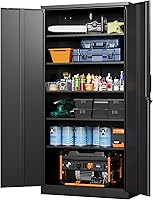
A tall cabinet can keep supplies grouped behind doors. The SISESOL has 5 adjustable shelves and a lock with 2 keys, so you can set the interior around bins or taller items.
At about 31.5 in wide, 15.75 in deep, and 71 in tall, it may suit a narrow wall area with useful vertical space. Skip it if you need a shallow cabinet, open tool access, or a drawer for small parts.
How can you divide a garage into useful zones?
Put each storage group near the task it supports. Keep car-care supplies near the parking area, garden items near an outdoor exit, and everyday tools close to the workbench.
A small sketch can reveal conflicts before you move heavy furniture. Mark the car footprint, door swings, and a clear route from the house door to the garage exit.
For a tight garage, plan around parking first. Our guide to organizing a small garage while keeping space to park covers ways to protect that clearance.
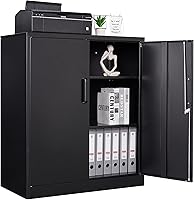
A drawer helps separate small hardware from larger tools. The Letaya has 4 doors, a lockable drawer, and 2 adjustable shelves.
It measures 32 in wide, 16 in deep, and 71 in tall. Choose it if you need distinct storage for small and bulky supplies; skip it if you don't need a drawer or lack room for the doors and drawer to open fully.
How do you choose shelves, drawers, or bins?
Match the storage feature to the size and access needs of each group. Shelves hold larger items, drawers separate small tools, and bins corral loose or seasonal supplies.
Adjustable shelves are useful when containers and equipment vary in height. The SISESOL and Reemoon each have 5 adjustable shelves, while the Letaya adds a drawer for smaller items.
The Reemoon’s inside-door pegboard keeps frequently used hand tools visible while larger supplies stay on shelves. Its 4 removable rubber casters lock in place, which suits a layout where you may reposition the cabinet.
Choose it if you want movable storage and door-mounted tool access. Skip it if the cabinet will sit in a fixed spot and you don't need casters or a pegboard.
Check that the casters and doors have room to move.
For a broader comparison of enclosed storage and open access, see cabinets versus open shelves for garage storage. If tools make up most of your storage, our guide to storing tools in the garage can help you plan that zone.
How do shelves and drawers help organize a garage?
Use shelves for larger items and drawers for small tools or hardware. Bins work well for loose pieces, but check their height and width against the cabinet interior before buying.
Avoid stacking items so high that one tool requires moving several others. Keep labels facing outward, put heavy items on lower shelves, and return supplies to the same spot after use.
Where should garage storage cabinets sit?
Place each freestanding cabinet on a stable floor where you can reach its contents without blocking movement. Measure the cabinet footprint and how far its doors or drawers extend into the room.
Check baseboards, pipes, outlets, and other wall obstructions before setting the cabinet in place. Keep electrical panels, shutoffs, and equipment that needs service accessible.
Follow the cabinet instructions and use any included leveling features as directed. Store heavier items low, and keep the floor around the cabinet clear enough to notice spills or debris.
Rolling storage can help when you regularly rearrange a work area. The Reemoon has removable casters that lock in place; for a fixed layout, a cabinet without wheels may be simpler to position and leave alone.
How do you keep a garage organized over time?
Give each shelf a clear purpose and reset it after projects. A brief check every few weeks can stop mixed piles from building up behind closed doors.
Return tools to their assigned zone, put small parts back in labeled containers, and remove empty boxes. If a shelf becomes crowded, review its contents before adding another cabinet.
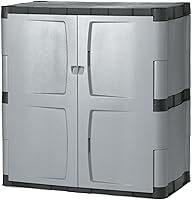
The Rubbermaid cabinet is made of resin and has 4 fixed shelves that cannot be adjusted or removed. It suits bins and supplies that fit the set spacing, especially when you want a cabinet that assembles without tools.
It measures 36 in wide, 18 in deep, and 72 in tall. Choose it if those dimensions and fixed shelf spacing work for your storage; skip it if you need adjustable shelves or a narrower footprint.
Keep hazardous products secured where children and pets cannot reach them, and follow each product label. For more guidance on suitable items, see what you can store in garage cabinets.
What are common garage cabinet organizing mistakes?
The most common mistake is buying cabinets before measuring the room and the items. A cabinet can fit along a wall yet still block a car door, walkway, or work surface when its doors open.
Other mistakes are choosing fixed shelves before checking bin heights, putting frequently used tools at the back, and storing heavy supplies overhead. Leave room to pull containers out, and place often-used items where you can reach them without shifting other things.
Don't treat every item as garage-safe. Follow storage labels for chemicals and sensitive supplies, and avoid blocking equipment or exits with cabinets and boxes.
How should you choose the right garage cabinet setup?
Choose based on what you store and how you use it. Pick adjustable shelves for mixed-size items, a drawer for small hardware, a pegboard and casters for visible, movable tool storage, or fixed shelves when your bins fit their spacing.
The SISESOL suits a tall, adjustable layout with a lock. The Letaya separates small and large items, the Reemoon adds movable access and a door pegboard, and the Rubbermaid fits groups that work with fixed shelf heights.
To decide how to organize a garage, measure first, map the zones around parking and work, and buy only the storage features your routine needs. Then label the shelves and follow your plan each time you put things away.
Frequently asked questions
Where should storage cabinets go in a garage?
Place cabinets along a wall where doors and drawers can open without blocking a car, walkway, or work area. Keep frequently used items within easy reach, and put occasional-use supplies higher or farther back.
Measure the cabinet, its door swing, and the clear floor space before choosing a spot.
How should I sort garage items before organizing?
Group items by task, such as hand tools, garden supplies, car care, sports gear, and seasonal items. Remove anything broken or no longer needed, then decide which groups belong in closed cabinets and which need quick access.
Keep hazardous products secured and follow their label storage directions.
Are cabinets or open shelves better for garage storage?
Cabinets suit items you want behind doors, including small supplies and things that need controlled access. Open shelves make visible bins easier to grab and can suit bulky items.
Choose based on what you store, how often you reach it, and how much wall and floor space you have.
What should I put in a garage storage cabinet?
Use a cabinet for items that fit its shelves and suit garage conditions, such as tools, maintenance supplies, or storage bins. Keep heavy items low and avoid placing anything where it can fall when a door opens.
Check product labels for temperature, moisture, and child-safety guidance before storing chemicals or sensitive items in a garage.