What Can I Store in My Garage Cabinets?
Tools, garden supplies, and durable household items are good garage cabinet choices when they can handle your garage's heat and humidity. For what can i store in my garage, keep food, medicine, and hazardous products under their label conditions and away from children and pets.
On this page (9 sections)
- What can I store in my garage cabinets?
- Are tools and garden supplies suitable for garage storage?
- Can I keep chemicals in a garage cabinet?
- What can I store in my garage, and what should stay indoors?
- Should I choose a resin or steel garage cabinet?
- How should I set up and care for a garage cabinet?
- What mistakes should I avoid when storing things in a garage?
- Which cabinet should I choose for what I need to store?
- What can I store in my garage safely?
You can store hand tools, garden supplies, and durable household items in garage cabinets if they can handle the garage's heat and humidity. For what can I store in my garage, start with gear that is safe at the temperatures and moisture levels your space reaches, then keep food, medicine, and hazardous products according to their labels.
A cabinet helps group supplies behind doors, while bins and drawers keep small pieces from spreading across shelves. Choose the layout around what you own: heavy equipment needs a suitable shelf, daily tools should be easy to reach, and products that need restricted access should be kept away from children and pets.
What can I store in my garage cabinets?
Hand tools, garden tools, car-care supplies, and durable seasonal gear are common garage cabinet choices. Store them only if they tolerate the temperature and moisture in your garage.
Group small items in labeled bins so you can find them without moving larger supplies. Put heavy objects on lower shelves, and leave frequently used gear near the front.
Choose adjustable shelves when boxes, bottles, and tools vary in height. The guide to how to organize a garage with storage cabinets explains how to group items into useful zones.
Are tools and garden supplies suitable for garage storage?
Most tools and garden supplies can go in a cabinet after you clean and dry them. Wipe off mud, moisture, and grass before putting items away, so dampness and dirt do not transfer to other gear.
Keep sharp tools secured, with blades or points covered where possible. Store long-handled tools so they cannot fall when you open the door; how to store garden tools in a garage covers ways to manage shovels, rakes, and other long items.
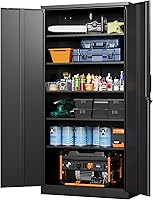
For hand tools and mixed supplies, a tall cabinet with adjustable shelves can fit objects of different heights. The INTERGREAT steel cabinet has four adjustable shelves and a three-point lock, making it a fit for garages where flexible storage and restricted access matter.
This tall cabinet is a poor match if you have low overhead clearance or only a small amount of gear. Measure the available height and door swing before choosing a floor-standing unit, and see how to store tools in a garage for a tool-focused plan.
Can I keep chemicals in a garage cabinet?
Store chemicals in a garage only when their labels allow the temperature and conditions there. Heat, freezing, sunlight, and contact with other products can make some supplies unsafe or ineffective.
Keep chemicals in their original containers with labels intact. Follow directions for ventilation and separation, and keep them away from children, pets, flames, and hot equipment.
A lock can help restrict access, but it does not control temperature or prevent leaks. The Rubbermaid resin cabinet has lockable doors, though a lock is not included, so it can suit general supplies that need to be kept out of sight if you provide a compatible lock.
Skip this cabinet if you need adjustable shelf spacing: its shelves cannot be moved or removed. Don't put leaking, unmarked, or damaged containers inside any cabinet; follow local guidance for disposal rather than keeping unwanted chemicals indefinitely.
What can I store in my garage, and what should stay indoors?
Keep food, medicine, and other temperature-sensitive items indoors unless their labels specifically allow garage storage. A garage can get hotter, colder, or more humid than the rest of the home.
Paper documents, photos, electronics, and musical instruments can also be damaged by dampness or temperature swings. Keep them in a climate-controlled room when preserving them matters.
Pet food can attract pests if a bag is open or its container is not sealed. Store it indoors or use a sealed container in a suitable location.
Should I choose a resin or steel garage cabinet?
Choose resin when rust resistance matters, and choose steel when adjustable shelves or drawers better fit your supplies. Either material can work for garage storage, but the layout and conditions should match what you plan to store.
The Suncast base cabinet has two metal-reinforced shelves, each rated for up to 200 lb when weight is evenly distributed. One shelf can be removed for taller items, and its padlock-ready doors suit someone who wants a resin cabinet with more flexible storage than a fixed-shelf design.
Skip the Suncast if you need multiple small-item drawers or a tall narrow unit. Its 30 in width and 20.25 in depth need a clear floor area, so measure before deciding where it will sit.
The BESFUR steel cabinet has one adjustable shelf and two drawers for small items such as screwdrivers and accessories. It suits a garage where loose hardware needs separation from larger supplies, and its door and drawer locks add restricted access.
Skip this style if you want a resin cabinet or need a taller storage area. Compare garage cabinets and open shelves if you are deciding whether your gear needs doors, quick access, or both.
How should I set up and care for a garage cabinet?
Measure the floor space, cabinet height, and door clearance before assembly. Check the assembly instructions and shelf limits, then place the cabinet where you can open it fully and reach the contents without blocking a walkway.
Follow the unit's instructions for assembly, shelf placement, and any wall attachment guidance. For a tall cabinet, use the specified attachment method if one is included or recommended, and keep heavy items low to reduce the chance of tipping.
Wipe up spills promptly and keep damp tools from sitting against shelves. Clean resin or metal surfaces with a method suited to the material, and check chemical containers now and then for leaks or damage.
What mistakes should I avoid when storing things in a garage?
Avoid storing items in the garage just because they fit in a cabinet. Labels still matter: closed doors do not make a product safe in heat, cold, or damp conditions.
Don't stack heavy objects high, overload shelves, or put leaking containers above items that water could damage. Keep sharp edges protected, small parts contained, and frequently used supplies in easy reach.
Avoid treating a lock as full protection. It can limit casual access, but hazardous products still need proper containers, label-compliant storage, and separation from incompatible items.
Which cabinet should I choose for what I need to store?
Choose by the items' size, weight, access needs, and the space available. Measure first, then decide whether fixed shelves, adjustable shelves, drawers, resin panels, or a lock will solve the main storage problem.
Pick the Rubbermaid for a medium-width resin cabinet with lockable doors and fixed shelves. Choose INTERGREAT when you want a tall steel cabinet with adjustable shelf positions, Suncast for reinforced resin shelves and a removable shelf, or BESFUR when drawers help organize small pieces.
For a small number of frequently used tools, open shelves may be easier to reach. For chemicals or supplies that need restricted access, favor closed, lockable storage while following each item's safe-storage directions.
What can I store in my garage safely?
For what can I store in my garage, begin with hand tools, garden gear, car-care supplies, and durable items that tolerate your local conditions. Keep food, medicine, important papers, and heat-sensitive belongings indoors unless their instructions say garage storage is suitable.
Match the cabinet to your main need: Rubbermaid for resin and simple fixed shelves, INTERGREAT for tall adjustable storage, Suncast for reinforced shelves, or BESFUR for drawers and a lower profile. Measure the space, check shelf limits, and review storage labels before loading it.
For the next step, follow how to organize a garage with storage cabinets or compare garage cabinet options for your space.
Frequently asked questions
What can I store in my garage cabinets?
Garage cabinets suit hand tools, garden tools, car-care supplies, and household items that tolerate the garage's temperature and humidity. Group similar items in labeled bins and keep heavy objects low.
Check each container's label before storing chemicals, batteries, food, or medicine in the garage.
Is it safe to store chemicals in a garage cabinet?
Some household chemicals can be stored in a garage, but follow each container's label for temperature, ventilation, and separation requirements. Keep them in their original containers, away from children and pets, and apart from heat, sparks, and incompatible products.
A lockable cabinet restricts access, but does not make unsafe storage safe.
Can I store food in garage cabinets?
Store food in a garage only if its packaging and local conditions protect it from heat, moisture, pests, and contamination. Many garages have larger temperature swings than indoor rooms, so a kitchen pantry is usually a better place for food, pet food, and medicine.
Should garage cabinets be lockable?
Choose lockable doors when you need to limit access to tools, documents, or hazardous supplies. A cabinet lock is a barrier, not a substitute for child-resistant packaging or following a chemical label.
For tall cabinets, check whether the cabinet includes a way to attach it to a wall.