How to Store Garden Tools in the Garage
To store garden tools in a garage, clean and dry them, hang long-handled tools securely, and group small supplies in a cabinet. Choose storage around your space, tool sizes, and how often you use each item.
On this page (9 sections)
- How should you store garden tools in a garage?
- How do you prepare garden tools before storing them?
- Where should long-handled tools go?
- How can a cabinet help with garden tool storage?
- Which cabinet fits a narrow corner?
- How should you store small tools and supplies?
- What mistakes make a garage tool setup harder to use?
- What should stay out of the way?
- How do you choose a garden tool storage setup?
To store garden tools in a garage, clean and dry them, hang long-handled tools securely, and group small supplies in a cabinet. Cover sharp edges, keep chemicals in their original containers, and leave a clear path through the garage.
Start by sorting tools by size, task, and how often you use them. A wall rack can hold everyday rakes and shovels, while cabinets keep smaller items together and seasonal gear out of sight.
How should you store garden tools in a garage?
Hang long-handled tools on a secure rack and place small tools on a shelf or in a bin. Clean and dry everything first so soil and moisture don't stay trapped against metal or wood.
Put frequently used tools near the garage door or work area. Store seasonal items higher or farther back, but keep heavy items at a safe, reachable height.
Group supplies by task, such as pruning, planting, and watering. Keep gloves and hand tools together, and use a small container for loose parts so they don't scatter across a shelf.
Choose a home for each tool before installing anything. A tool that you use every week should be easy to reach and return, while a seasonal item can take a less convenient spot.
How do you prepare garden tools before storing them?
Brush off soil, wipe away moisture, and let tools dry fully before putting them away. Follow the tool maker's care instructions, especially for blades, wooden handles, or parts that need special attention.
Check for loose handles, damaged cords, or exposed sharp edges. Set aside tools that need repair, and cover blades or points before placing them on a rack or shelf.
Keep wet hoses and muddy footwear away from clean tools. If the garage floor or wall gets damp, choose a storage spot that keeps tools clear of moisture.
Make cleaning part of putting tools away, rather than leaving a large cleanup for the end of the season. Dirt can hide damage, and damp items stored in a crowded corner may be harder to spot later.
Where should long-handled tools go?
Use a wall rack or hooks made for the tool's shape and weight. Space rakes, shovels, hoes, and brooms so one can come down without knocking another loose.
Check the rack's mounting instructions and secure it to suitable framing. Don't rely on a small adhesive hook for a heavy tool, and avoid placing sharp ends where someone could walk into them.
Keep handles facing the same direction where possible. That makes the group easier to scan and reduces awkward movement when you pull one tool free.
Before mounting a rack, check the height and the tools' full length. Make sure the handles won't hit a parked vehicle, shelving, or a door when you lift them down.
For the rest of your garage layout, see how to organize a garage with storage cabinets. The guide to storing tools in the garage also covers ways to group tools beyond garden gear.
How can a cabinet help with garden tool storage?
A cabinet works well for small tools, gloves, and supplies that are easier to manage behind doors. Choose shelf spacing and cabinet depth around the items you plan to store, and leave room to open the doors fully.
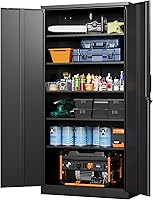
The SISESOL cabinet measures 36 in wide, 18 in deep, and 72 in tall. It has a hanging rod, 5 shelves, a key lock, and an anti-tip kit.
This cabinet suits a garage with enough floor and wall space for a wide unit and a mix of hanging and shelf storage. Use the rod for suitable items that benefit from hanging, and reserve the shelves for grouped supplies.
It may be a poor fit if you have a narrow spot, don't need a hanging rod, or want open access without opening doors. Measure the full space, including door clearance, before choosing a location, and secure the cabinet to the wall with its included anti-tip kit.
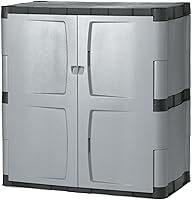
For a tall resin option, the Suncast 72 Inch Resin Storage Cabinet has 3 adjustable reinforced shelves, each rated for up to 75 lb. Its padlockable doors have upper and lower latches.
Choose this cabinet if adjustable shelf heights and a taller, enclosed storage area suit your supplies. It may not suit a garage with very limited floor depth, so measure the spot and check that the shelves can be arranged for the items you intend to store.
Keep frequently used items at a convenient height and heavier items lower down. Adjust the shelves before loading the cabinet, so you don't have to unload it to change the layout.
Which cabinet fits a narrow corner?
A narrow locker can make use of a tight section of wall for garden supplies. Measure the width and depth first, then make sure you can open the doors and remove stored items easily.
The Suncast 72 Inch Lockable Resin Locker measures 15 in wide, 20 in deep, and 72 in tall. It includes 2 shelves, a hanging rod, and a coat hook, with shelves rated for 30 lb each.
This locker suits a narrow wall area where a small mix of hanging and shelf storage is useful. Its ventilated door allows airflow, so choose a different sealed container for items that need protection from dust or damp air.
Skip it if you need broad shelves or plan to store heavy supplies on the shelves. Keep each shelf within its 30 lb limit, and leave enough room in front to open the door and reach the hook and rod.
If you need a narrow shelf cabinet with adjustable spacing, the Sunnydaze 72 Inch Locking Resin Cabinet measures 23.25 in wide, 13.75 in deep, and 72 in tall. Its shelves adjust in 4 in increments and hold 30 lb each.
This cabinet is a good fit for smaller tools and supplies when you want shallow depth and adjustable shelves. The top and each shelf hold up to 30 lb, and the cabinet includes an anti-tip kit and 2 keys.
It won't be the right choice for bulky gear that needs deeper or wider shelves. Check the dimensions of bins and supplies before buying, and anchor the cabinet as directed.
For more cabinet styles, see garage cabinets and how to pick the right ones for your space. If you are deciding between a closed cabinet and a rack, compare cabinets and open shelves for garage storage.
How should you store small tools and supplies?
Keep hand tools in a labeled bin or on a shelf, with sharp points and blades protected. Store gloves and empty pots together, and keep small parts in a container that won't tip when you open the cabinet.
Place heavy items on lower shelves and lighter supplies above them. Don't overload a shelf just because there is open space; use the stated shelf limit when one is given.
Keep fertilizers, pesticides, and fuels in their original containers with labels intact. Follow each label's storage directions, separate chemicals from food and pet items, and keep them out of children's reach.
Don't put wet gloves or muddy hand tools straight into a closed cabinet. Let them dry first, or keep them in a spot with airflow until they're ready to store.
What mistakes make a garage tool setup harder to use?
The biggest mistakes are storing damp tools, stacking items where you can't see them, and choosing storage before measuring. Each can make tools harder to find or retrieve safely.
Avoid leaning sharp tools loosely against a wall. They can slide into a walkway, and a crowded pile forces you to move other tools to reach the one you need.
Don't put every item at the easiest-to-reach height. Give the most-used tools convenient spots, store occasional gear farther away, and keep heavier items low enough to handle safely.
A cabinet can also become cluttered if tools and supplies have no assigned shelf or bin. Labeling containers and leaving a little room to remove them makes it easier to put things back after a project.
What should stay out of the way?
Keep the floor, electrical panel, and path to the garage door clear. Don't store tools where a falling rake or shovel could block a walkway or land on a vehicle.
Before adding cabinets or shelves, check your parking space and the door swing. Also make sure the storage won't block access to items or areas you need to reach.
Our guide to what you can store in garage cabinets can help you decide which supplies belong behind closed doors. Keep materials that need special storage conditions according to their labels.
How do you choose a garden tool storage setup?
Choose a wall rack for long tools, a cabinet for smaller supplies, or both if you have enough wall and floor space. Measure the area, account for doors and walkways, then sort tools by size, weight, and how often you reach for them.
How to store garden tools in a garage with limited space
For a tight garage, start with the longest tools and decide whether a wall rack can keep them off the floor. If you need an enclosed unit too, compare the narrow Suncast locker and shallow Sunnydaze cabinet against your measured space.
For a wide mix of supplies, consider the SISESOL cabinet's rod and shelves. For adjustable resin shelving, compare the taller Suncast cabinet; for a narrow footprint, compare the Suncast locker or Sunnydaze cabinet.
Skip a cabinet that makes parking, door access, or tool retrieval awkward. A wall rack alone can be enough if most of your garden gear has long handles and you have little need to conceal small supplies.
Clean and dry tools before storing them, keep sharp edges covered, and follow storage directions on chemical labels. Pick the arrangement that leaves a clear route through the garage and gives frequently used tools an easy place to return.
Frequently asked questions
How should I store long-handled garden tools in a garage?
Clean and dry each tool, then hang it from a wall-mounted rack or sturdy hooks that fit its handle. Space tools so you can lift one out without shifting the others, and keep blades or points covered.
Check the rack's mounting instructions and attach it to suitable framing.
Is it safe to store garden chemicals in a garage cabinet?
Check each label for storage directions and keep chemicals in their original, closed containers. Separate them from food, pet supplies, and tools used for cooking or drinking water.
Store them where children and pets cannot reach them, and follow local guidance for products that require special handling.
Should garden tools be stored in a cabinet or on a rack?
Use a rack for long tools you reach for often, and a cabinet for small supplies or items you want behind closed doors. A mix usually works well: hang rakes and shovels, then use shelves or bins for gloves, hand tools, and accessories.
How do I keep garden tools from rusting in the garage?
Remove soil and moisture before putting tools away, and let them dry fully. Keep metal tools away from damp floors and leaking walls, and check them from time to time for rust.
Follow the maker's care directions for cleaning or protecting each tool.