How to Organize a Small Garage and Still Park
To learn how to organize a small garage, reserve the car's parking and door space first. Measure the vehicle and walking path, then put daily gear within reach and move occasional items to suitable walls or compact cabinets.
On this page (9 sections)
- How to organize a small garage around the car
- What should you remove and group first?
- Where should storage go in a small garage?
- Which wall cabinet suits a small garage?
- When does a freestanding cabinet make sense?
- How should tools and daily gear be arranged?
- What mistakes make a small garage harder to use?
- How do you decide which layout to use?
- What is the simplest way to organize a small garage?
To organize a small garage and still park, measure the vehicle and keep its parking, door swing, and walking route open first. Then sort what remains by use, size, and safety so every item has a realistic home.
The key is to plan around your actual car and routines, not a row of storage units. Mark the space the car needs before deciding whether a cabinet, shelf, hook, or bin belongs on each wall.
How to organize a small garage around the car
Start with a clear parking footprint, then fit storage into the remaining space. Park where you normally do, include the mirrors, and mark the vehicle and door-swing zones with painter's tape.
Measure the walking route from the driver's side to the house or garage entrance. Include room to carry groceries or a tool box through without turning sideways or moving stored items.
Check ceiling height, wall clearance, cabinet depth, and door swing before buying anything. A cabinet can fit on a wall but still crowd the car door when opened.
After marking the zones, try the layout for a few days using temporary boxes or tape marks. This can reveal whether the path to a frequently used item crosses the parking space or whether a storage door would hit the car.
What should you remove and group first?
Sort items before adding storage, because unused things take up the same space as useful ones. Make separate keep, donate, recycle, and discard groups, then remove the items that no longer belong in the garage.
Group what stays by task: car care, hand tools, garden supplies, sports gear, and seasonal items. Put weekly-use items near the entrance or work area, and place occasional gear in less convenient spots.
Keep chemicals in their original containers and away from children, pets, heat, and ignition sources. Check local disposal guidance for unwanted chemicals rather than pouring them down a drain.
Before picking a container, consider the size and shape of the items. A shallow tray suits small loose supplies, while long-handled tools need a secure vertical spot and bulky seasonal items may need a shelf or bin.
Where should storage go in a small garage?
Use wall space for items that can come off the floor, but keep heavy loads secure and away from people and vehicles. Hooks, rails, shelves, and cabinets work best when they are placed around the parking and walking zones.
Mount storage into suitable structural support, using hardware made for the wall and load. Keep heavy objects low, and avoid putting anything overhead where it could fall onto a person or vehicle.
A wall cabinet can contain small supplies behind doors while freeing floor area. The Suncast 4 Cu Ft Resin Wall Cabinet suits light garage gear and has a metal-reinforced shelf rated for up to 50 lb.
Its interior is about 27 in wide, 10 in deep, and 27.5 in high, so it fits compact items better than bulky containers. Choose it when the wall can support a cabinet and you want resin construction; skip it if you need deep storage or don't have a suitable mounting location.
For a broader room plan, see how to organize a garage with storage cabinets. If you're weighing visibility against concealed storage, compare garage cabinets and open shelves.
Which wall cabinet suits a small garage?
Choose a wall cabinet when it keeps useful supplies accessible without taking away floor space. Match the cabinet's size and shelf setup to what you will store, then confirm the mounting method and wall support before loading it.
The VEVOR 30 Inch Steel Wall Cabinet suits tools and supplies that benefit from adjustable shelf positions, a keyed lock, and a cable opening for cords. Its hanging rail is designed for wall mounting, and the brand says each shelf holds up to 120 lb.
This is a fit for someone with a suitable wall and a need for flexible shelf heights. Skip it if you need freestanding storage or cannot verify that the wall and mounting setup can carry the cabinet and its contents.
Set the shelf heights before loading, grouping items by how often you reach them. Keep charging devices and cords arranged so they don't snag when you open the doors.
When does a freestanding cabinet make sense?
Pick a freestanding cabinet when floor-level storage is more useful than another wall installation. Confirm that the cabinet's footprint and door swing stay outside the car's clearance and the main walking route.
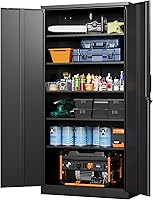
The Letaya 36 Inch Small Locking Steel Cabinet measures about 36 in high, 32 in wide, and 16 in deep. Its two adjustable shelves and key lock suit supplies that need an enclosed, compact floor-level home.
It is a good choice for a garage with a spare wall section and small items to secure. Skip it if the 16 in depth narrows your walking route or leaves too little room for a vehicle door.
The SISESOL 36 Inch Two-Door Steel Cabinet is similar in footprint and has two adjustable shelves, a three-point lock, and a supplied wall attachment device intended to help prevent tipping.
Choose it if you want a compact enclosed cabinet and will attach it as instructed. It is a poor fit if you cannot secure it to the wall or if its doors would open into the car's space.
Both cabinets require assembly. Lay out parts before starting, follow the instructions, and leave enough clear floor area to assemble and position the cabinet safely.
For other cabinet sizes and styles, see how to choose garage cabinets for your space. If a tall cabinet is part of the plan, review how to keep a garage cabinet from tipping over.
How should tools and daily gear be arranged?
Keep frequently used tools close to the work area and secure sharp, heavy, or long items. Put each category in one place so you can return items without leaving them on the floor.
A pegboard or wall rail can organize hand tools, while a narrow cabinet can hold smaller supplies that you prefer to keep behind doors. Long-handled garden tools should be grouped so they don't lean into the car or fall into a walkway.
Use labels on opaque bins, and store occasional-use items above or farther from the entrance only where the installation is secure. Leave some open space for gear that changes with the season.
See ways to store tools in the garage for a dedicated tool layout. For shovels, rakes, and other long equipment, use garage storage ideas for garden tools.
What mistakes make a small garage harder to use?
The most common mistake is buying storage before measuring how the car and people move through the garage. A unit that fits the wall can still block a door, mirror, or route to the house.
Avoid filling every shelf and wall immediately. Keep a small amount of open capacity so the next seasonal item doesn't become a floor pile.
Don't store heavy objects on high shelves, and don't mount cabinets without checking the wall and required hardware. Keep doors and drawers clear of vehicles, and make sure daily items aren't trapped behind rarely used gear.
Finally, don't use the garage as a default home for everything. If an item is unused, unsafe to store there, or has no assigned purpose, decide where it belongs before creating more storage.
How do you decide which layout to use?
Choose storage by the space you have and the items you reach most. Use wall cabinets when floor room is limited and a secure mounting point is available; use a freestanding cabinet when a clear floor section remains.
Pick open shelving or hooks when quick visibility matters and items can be stored safely. Choose a cabinet when doors help contain small supplies, or when you want a lockable place for selected items.
Before buying, compare the measured depth and width with your tape-marked layout. Confirm that you can open the storage doors, open the car doors, and walk to the entrance without shifting anything.
What is the simplest way to organize a small garage?
For how to organize a small garage, protect the parking and walking zones, remove what you don't use, then assign the rest by frequency and task. Keep everyday gear within reach and place occasional items in safe wall or cabinet storage.
Choose the Suncast for compact wall storage, the VEVOR when adjustable wall-mounted steel storage suits your setup, and a Letaya or SISESOL cabinet when you have a suitable floor spot. Measure each location and account for installation and door clearance before choosing.
Once you know what needs a home, use the garage storage cabinet layout guide to plan the rest.
Frequently asked questions
How do I organize a small garage and still park?
Measure the vehicle, doors, walking route, and storage depth first. Mark a clear parking zone and move infrequently used items up or to the walls.
Keep daily gear near the entrance, and test the layout with the car parked before adding cabinets or shelves.
What should I store on garage walls?
Store light, frequently used items on wall hooks or shelves, such as hand tools and sports gear. Secure heavy items with hardware suited to the wall and item, and keep anything that could fall away from the vehicle, doors, and walking path.
Are cabinets or open shelves better in a small garage?
Cabinets hide clutter and can protect stored items behind doors, while open shelves make bins easier to see and reach. Choose based on what you store, how often you use it, and whether the doors or shelf depth would interfere with parking.
How much space should I leave around a parked car?
Leave enough room to open the doors, walk around the vehicle, and reach the garage entrance safely. The needed clearance depends on your vehicle and household, so test it with the car in place and mark the usable zones before fixing storage to a wall.