Choosing a Lockable Storage Cabinet for the Garage
A lockable storage cabinet can keep garage tools, supplies or documents behind closed doors. Choose by lock style, material, dimensions, shelf capacity and whether you need a freestanding or wall-mounted unit.
On this page (9 sections)
- What should a lockable storage cabinet protect?
- Which lock type should you choose for a garage cabinet?
- What material and mounting style fit your garage?
- How much space and shelf capacity do you need?
- Which lockable storage cabinet suits each garage?
- How do you set up a lockable cabinet safely?
- How should you care for and use a garage storage cabinet?
- What mistakes should you avoid when choosing a lockable cabinet?
- Which lockable storage cabinet should you choose?
A lockable storage cabinet keeps garage tools, household supplies, or documents behind closed doors. Choose one by matching its lock, material, dimensions, shelf capacity, and mounting style to what you plan to store.
A built-in key lock works if you want the lock included. Padlock-ready handles let you supply a separate lock, but neither style turns a cabinet into a safe for valuables.
Start with our guide to choosing garage cabinets if you need to compare layouts and materials before focusing on a lock.
What should a lockable storage cabinet protect?
Choose a cabinet for items you want out of sight or for which you want to limit casual access. Tools, household supplies, and paperwork can all suit closed storage, as long as they fit the cabinet and stay within its shelf limits.
A cabinet lock only controls its doors. It does not secure the whole garage, so consider who can enter the space and who can reach the keys or padlock.
Follow each item’s storage instructions for chemicals, fuel, medicines, and other hazardous materials. Keep anything that needs special temperature or ventilation conditions in an appropriate place rather than assuming a closed cabinet will provide them.
If your main need is sorting and reaching tools, see our advice on storing tools in the garage. For a broader list of suitable items, read what you can store in garage cabinets.
Which lock type should you choose for a garage cabinet?
Choose a built-in key lock if you want a cabinet with its own locking mechanism. Pick padlock-ready handles if you want to choose a separate padlock and manage its key or combination yourself.
The two Letaya steel cabinets have key locks and three-point locking systems. The Suncast wall cabinet has padlock-ready handles, and the Sterilite cabinet accommodates a standard-sized padlock.
A lock does not tell you how well a cabinet resists forced entry. If you plan to store higher-value tools, consider the cabinet’s construction, how it can be secured, and who can access the garage.
| Lock style | Works well when | Check before choosing |
|---|---|---|
| Built-in key lock | You want an included lock on a freestanding cabinet | Where you’ll keep the key and whether the lock suits your needs |
| Padlock-ready handles | You want to select a separate padlock | The padlock size and handle design |
| No lock | Your goal is covered storage and organization | Whether open access is acceptable for everyone using the garage |
For more options with a built-in lock, compare steel storage cabinets with a lock.
What material and mounting style fit your garage?
Choose a freestanding steel or plastic cabinet when you have floor space for a tall unit. A wall-mounted resin cabinet can free that space, provided the wall can support it and its smaller depth fits your belongings.
The Letaya cabinets are freestanding steel units with powder-coated finishes and adjustable shelves. They also have holes at the back for wall mounting.
The Sterilite is a freestanding plastic cabinet that accommodates a padlock. The Suncast Commercial cabinet is a resin unit designed for wall mounting.
Garage conditions differ, especially near exterior doors or where moisture collects. Check the care and installation instructions for the cabinet you choose, and avoid treating a lock or finish as a substitute for sensible placement and maintenance.
For a material comparison, read metal versus wood garage cabinets. If you need to plan the whole layout, our guide to organizing a garage with cabinets can help.
How much space and shelf capacity do you need?
Measure the cabinet location, delivery route, and space for open doors before choosing a size. Outside dimensions show whether the cabinet can fit, while shelf limits help you decide what belongs inside.
The 72 in Letaya cabinet measures 36 in wide and 18 in deep. Its 5 adjustable shelves have a stated capacity of up to 120 lb each.
The 71 in Letaya model measures 32 in wide and 16 in deep. It also has 5 adjustable shelves rated for up to 120 lb each.
The Sterilite measures 25 5/8 x 18 7/8 x 69 3/8 in. Its interior shelves are 17.65 in wide and 13.31 in deep, with a recommended limit of 40 lb per shelf.
The Suncast measures 30 x 12 x 30.25 in. Its adjustable, metal-reinforced shelf is rated for up to 50 lb.
Treat those as per-shelf limits, not whole-cabinet capacities. Keep each shelf within its stated limit and put heavier items low enough to lift safely.
Measure doorways, corners, and ceiling height along the delivery route, not just the final spot. Leave room to open the doors and reach shelves, and check how the cabinet is meant to be secured.
Which lockable storage cabinet suits each garage?
Choose based on what you need to store and the space you can give the cabinet. A tall steel locker suits a larger load and an included key lock, while a narrow plastic unit or shallow wall cabinet fits different space limits.
Is a tall steel lockable storage cabinet right for you?
The Letaya 72 Inch Wide Locking Steel Locker suits a garage that can fit a 36 in wide, 18 in deep cabinet and needs adjustable shelving for bulky items. Its key-operated three-point lock is useful when you want the locking mechanism built in.
Skip this wider model if the floor area is tight or your storage route has narrow turns. Measure first, including the space needed for both doors to open.
The Letaya 71 Inch Locking Steel Locker Cabinet is a better fit when you want similar tall steel storage with a smaller footprint. It is 32 in wide and 16 in deep, with 5 adjustable shelves and a key-operated three-point lock.
Choose either Letaya if you need the taller steel format and can secure and assemble it as directed. Skip both if you need a shallow cabinet, a light unit that is easy to move, or a wall-mounted option.
Who should choose a freestanding plastic cabinet?
The Sterilite 4-Shelf Lockable Utility Cabinet suits someone who wants a narrower freestanding cabinet and expects to store lighter items. It accommodates a standard-sized padlock and assembles without tools.
Its outside width is 25 5/8 in, but the interior shelves are only 17.65 in wide and 13.31 in deep. Skip it if your bins, boxes, or tools need a broad shelf or exceed the 40 lb recommended limit.
When is a wall-mounted cabinet the better choice?
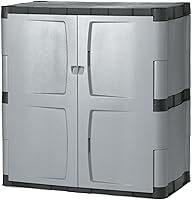
The Suncast Commercial Lockable Resin Wall Cabinet suits small tools and supplies when keeping the floor clear matters more than having a deep interior. Its padlock-ready handles let you choose a separate lock.
The 12 in depth limits the size of what you can store. Skip it if you need a tall locker or cannot confirm that the wall and fasteners can support the loaded cabinet.
For another comparison of layouts, see our guide to garage storage cabinets with doors and shelves.
How do you set up a lockable cabinet safely?
Assemble a freestanding unit on a level surface and follow its instructions in order. For a tall cabinet, use the intended mounting points where available and secure it as directed before loading it.
Clear the assembly area so panels and shelves can be laid out without blocking a doorway or walkway. Check the parts against the instructions before beginning, and use the included tools or any tools the instructions require.
For the wall-mounted Suncast, choose a suitable location and confirm that the wall and fasteners can support the cabinet and its contents. Follow the wall-mounting instructions, then check that it is secure before adding items.
Once assembled, place shelves at heights that match your containers and leave enough room to remove them. Put frequently used and heavier items where you can reach them without lifting overhead.
A tall cabinet can become unstable if it is uneven or loaded carelessly. Our guide to keeping a tall garage cabinet from tipping over covers placement and securing.
How should you care for and use a garage storage cabinet?
Keep the cabinet in a suitable location and follow its care instructions. Wipe away dirt or spills promptly, and check the lock, doors, shelves, and mounting points during ordinary garage cleanups.
For metal cabinets, keep surfaces dry and address signs of moisture rather than letting water sit. See how to clean metal cabinets and how to keep a metal garage cabinet from rusting.
For any material, avoid exceeding the stated shelf limits or placing items where they can fall when a door opens. Store small parts in labeled containers, keep hazardous materials in their original containers, and leave the cabinet’s lock accessible to the people who need it.
What mistakes should you avoid when choosing a lockable cabinet?
The most common mistake is measuring only the floor space. Check the delivery route, door swing, ceiling clearance, interior shelf dimensions, and the space needed to mount or anchor the cabinet.
Another mistake is treating a lock as a guarantee of security. Choose a lock style that fits your access needs, but consider who can enter the garage and whether the cabinet can be secured as intended.
Do not assume a wide cabinet always has wider usable shelves. The Sterilite’s 25 5/8 in exterior width includes its structure, while its interior shelf width is 17.65 in.
Finally, do not load every shelf to its maximum without considering the total arrangement. Keep within each shelf’s limit and place heavy items low and within comfortable reach.
Which lockable storage cabinet should you choose?
Choose the 72 in Letaya if you have floor space for its wider body and want adjustable steel shelves with a built-in key lock. Pick the 71 in Letaya if you want a similar tall steel cabinet in a smaller footprint.
Choose the Sterilite for narrower freestanding storage of lighter items that fit its interior shelf dimensions. Choose the Suncast when a wall-mounted cabinet and its 12 in depth suit your space and contents.
Before buying, confirm the measurements, shelf limits, lock type, and mounting plan. If a door-and-shelf layout is your main concern, compare garage storage cabinets with doors and shelves before deciding.
Frequently asked questions
What should you store in a lockable garage cabinet?
A lockable cabinet suits hand tools, household supplies, or documents you want behind closed doors. Check that the material, shelf capacity, interior size, and location fit each item.
Keep hazardous materials in their original containers and follow their labels for storage and access.
Is a key lock or padlock better for a garage cabinet?
A built-in key lock is convenient when you want a locking system included with the cabinet. Padlock-ready handles let you choose a separate lock.
Neither design makes a cabinet theft-proof.
Match the lock to who needs access, and keep keys or combinations secure.
Should a tall garage cabinet be anchored?
Check the cabinet’s instructions and use its intended wall-mounting points where available. Place it on a level surface, and follow the maker’s guidance for securing it, especially when it will hold heavy items.
See our guide to keeping a tall garage cabinet from tipping over.
Can you mount a lockable cabinet on a garage wall?
Some cabinets are designed for wall mounting, while others are freestanding. Check the installation instructions, cabinet weight, wall type, and fasteners before installing a loaded unit.
A wall cabinet can free floor space, but its depth may limit which containers and tools will fit.